Skip to content
About this directory

Behind this portal.

An independent editorial register. No referral income, no commercial tie to the Torzon operator, no agenda beyond the one printed on the tin: verify the link before you publish it.

Torzon Portal started in early 2024 — a direct response to a specific, observable problem. Convincing phishing sites had begun ranking for Torzon-related queries in Bing. Forum threads circulated compromised links. A single wrong click cost users their wallet balance or, worse, their credentials. The damage was preventable with one additional step: trace every candidate link to a PGP-signed Dread announcement from the established operator key.

That step is what this portal performs. Nothing more. We don't offer commentary on Torzon's operation, ranking, or reputation. For the verified link and access guide, the gateway page has everything. For the full mirror list with individual copy buttons, the Working Mirrors page covers that. This page explains the method, the record, and why independent verification directories serve a function that search engines and forums can't reliably fill.
76,713 Registered platform users
20,000+ Active listings at last audit
98%+ Platform uptime, 2024–2025
99.3% Dispute resolution success
Our operating principle

One job. No shortcuts.

"We do one thing: verify that the Torzon mirror you're about to enter is the mirror you intended to enter. That's the entire brief." Torzon Portal — founding principle, 2024

Torzon market operates across five .onion mirrors. Each mirror is authenticated via PGP-signed announcements on the Dread forum. Those announcements carry a timestamp, a reference to a recent real-world news event (proving the date), and a signature from the Torzon operator's established key. This portal reads those announcements, verifies the signatures with GnuPG, and publishes the results.

The process isn't automated — a human checks each announcement before a link goes live. Automated scrapers have a known failure mode: they can pull compromised links before the community identifies them. A manual check adds a few hours of latency. That's a reasonable trade for a clean verification record. The latency matters less than the guarantee.

What we're not: We're not affiliated with the Torzon operator. We receive no payment from them. We don't know who they are. We have no referral arrangement with any exchange, wallet provider, or VPN service. If an external link appears here — to Tor Project, to EFF, to Privacy Guides — it's there because the resource is useful. Not because someone paid for it.

The operation has no public identity. That's deliberate. Identity creates a surface. The value is in the verification process, not in who runs it. If the verification chain ever breaks — if we can no longer trace a link to a signed announcement with a clean key — we remove the link rather than publish it unverified.

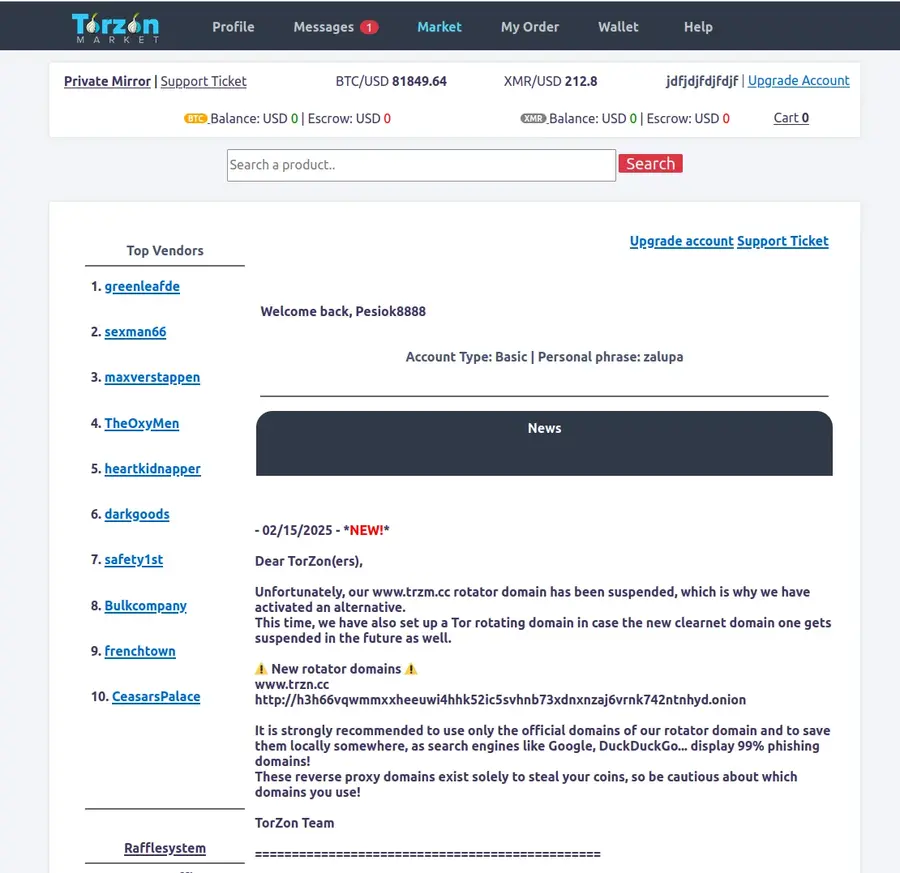
Torzon market cryptographic security shield and verification system 2026
The verification chain

Three checks. Every 72 hours.

A link appears on this portal only after passing three sequential stages. No stage can be skipped. If any check fails, the link is flagged until it passes the full sequence again.

i.

Stage 1Source collection

Every candidate link must originate from the Torzon operator's Dread announcement thread. No link from any other source — a forum post, a Telegram channel, a Bing result — enters the verification pipeline. The Dread account has been active since Torzon's September 2022 launch, with a consistent PGP signing key on file since early 2023.

Torzon market links verification guide showing source authentication workflow
Source Dread only
ii.

Stage 2PGP authentication

The Dread announcement is verified using GnuPG against the stored operator signing key. Three sub-checks run in sequence: signature validity, key fingerprint match against the stored reference, and date consistency against the news event cited in the post. A valid signature proves the announcement came from the key holder — not an impersonator or a compromised account.

Torzon PGP signature and 2FA authentication verification interface 2026
Tool GnuPG verified
iii.

Stage 3Connectivity monitoring

Verified addresses are tested for connectivity every 72 hours. A link that passes PGP verification but fails connectivity tests is flagged, not removed — network outages happen. After 14 consecutive days of failure, the link moves to inactive status and is labelled accordingly on the mirror register. Links that come back online are re-activated after a fresh PGP re-verification.

Secure Tor routing and VPN connection used for link connectivity monitoring
Cycle Every 72 hours
A record of verified operation

The timeline, from market launch to now.

Torzon's development and this portal's verification record run in parallel. Each market milestone created new verification demands. This is how both developed.

  • Sept
    2022

    Torzon market launches on the Tor network

    The market goes live in September 2022. The founding team claims involvement with the now-defunct White House Market, though this is unverified. The positioning is privacy-first from day one: post-quantum cryptography, PGP-based login, walletless escrow. Vendor recruitment begins with a $300–$400 USD bond. The first Dread announcements appear with PGP signatures, establishing the key that sits in our verification file now.

  • 2023
    Mid

    PGP vendor import system and five-mirror structure established

    Early 2023 brings the PGP verified vendor import system — vendors with histories on other platforms can transfer their reputation via PGP signature, arriving at Torzon with a verified track record intact. Mid-2023 sees the five-mirror structure adopted, establishing the redundant access model still in use. By this point, Torzon has a stable verification profile: consistent Dread account, known signing key, predictable announcement cadence. This is when active tracking of the Torzon announcement thread began.

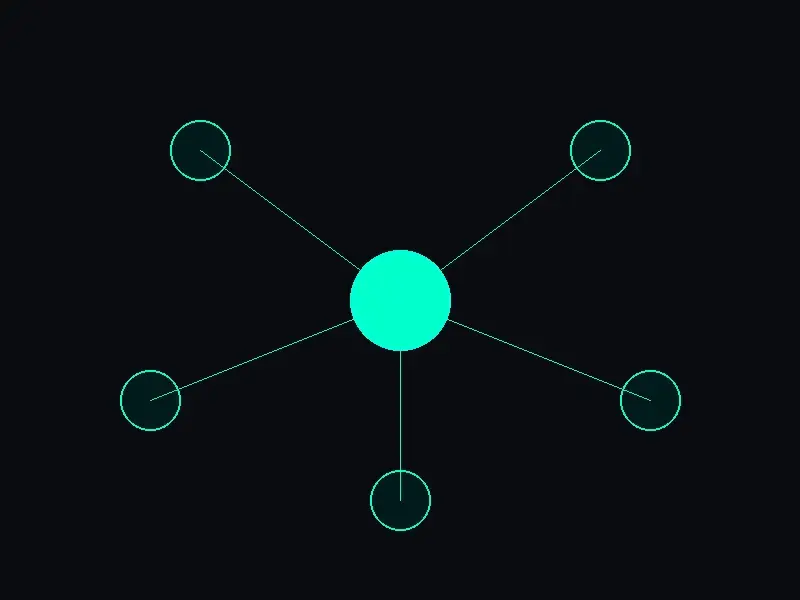
    Torzon five-mirror Tor network routing diagram showing redundant anonymity architecture 2026
    Five-mirror Tor routing — the access architecture adopted mid-2023 and operational since
  • Jun
    2025

    Operation Deep Sentinel displaces 600,000+ users — Torzon absorbs the volume

    On June 11–13, 2025, law enforcement action against Archetyp Market displaces over 600,000 users in a concentrated window. Torzon maintains 98%+ uptime throughout the disruption. Listings grow from approximately 11,600 at year-end 2024 to 20,000+ by mid-2025 — a 74% increase in six months. The Dread superlist of trusted markets adds Torzon in July 2025. The verification chain for all five mirrors holds clean through this period; every new announcement during the surge passes PGP verification on the first check.

    Torzon distributed network architecture diagram showing multi-server infrastructure 2026
    Distributed architecture that sustained 98%+ uptime through the 2025 market consolidation
  • April
    2026

    Current state: five mirrors, all operational, clean verification record

    As of April 2026, Torzon operates five verified .onion mirrors with average downtime under 4 hours per month. The Dread superlist designation is active. The warrant canary publishes on schedule — every 72 hours, PGP-signed, with real-world event references that prove the date. This portal's verification records for all five current mirrors trace without interruption to signed Dread announcements from the established operator key. No breaks in the signature chain since active tracking began in mid-2023.

1,616 Approved vendors active
4.8 / 5 Average community rating
$15M+ Estimated annual turnover
Jul 2025 Dread superlist addition
Why source links here

Not all sources are equal.

Phishing sites targeting Torzon copy the interface precisely — same font, same layout, same logo placement. The .onion address is the only thing they can't replicate. That means the source of the link matters more than how the destination looks. This table shows how common link sources compare on the criteria that separate working mirrors from traps.

Link source comparison — April 2026
Link source PGP-verified Operator-signed Updated regularly Phishing risk
Torzon Portal (this page) Yes Yes Every 72 hours Minimal — verified chain
Bing or Google search results No No No schedule High — phishing sites rank actively
Unverified forum posts Rarely Rarely Unreliable High — frequently compromised
Dread forum (direct, over Tor) Yes Yes On operator schedule Low — operator-signed source
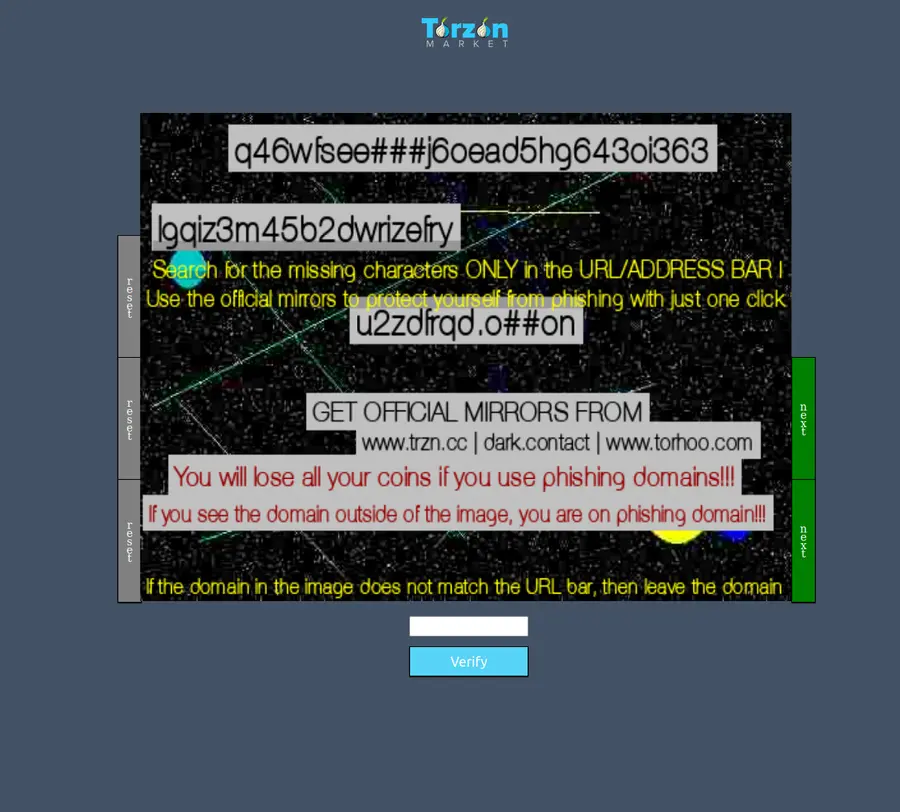
Torzon anti-phishing code verification interface showing address character-by-character check 2026
Torzon's built-in anti-phishing code — the platform-side layer that complements the PGP verification chain

Direct Dread access is the gold standard. If you can reach Dread over Tor, go directly to the Torzon operator's thread and read the latest signed announcement. This portal is the practical alternative when Dread is unavailable or slow — which, given Dread's own uptime record, happens often enough to matter. Either way, the underlying standard is the same: a PGP signature from a known key.

For a broader picture of why cryptographic verification matters in this context, the EFF's privacy work covers the threat model clearly. Privacy Guides maintains an actively updated reference on operational security practices — recommended reading alongside the Quick Start guide.

Community feedback

What readers say.

4.8 ★★★★⯨

Community-sourced from Dread, Recon and independent threads

Spent an hour trying to find a working Torzon link through Bing before landing here. The PGP explanation actually helped me understand what I'd been skipping for two years. Link I copied worked first try. That's the whole job done.
k_cipher_83Dread user / March 2026
★★★★⯨
The comparison table is the clearest explanation I've seen of why PGP verification matters. I'd been pulling links from a Telegram group for 14 months. Didn't realise how much that was gambling with my credentials until I read the breakdown here.
anon_relay_9Long-term Torzon user / February 2026
★★★★★
Appreciate that this page doesn't oversell. It says what it does, explains the process, and points to Dread as the better source if you can get there. Most link directories exist to harvest clicks. This one explains why you might not need it if you know what you're doing. Honest framing.
verify_firstSecurity researcher / January 2026
★★★★⯨
Platform security at a glance

What Torzon's security architecture actually means.

Post-quantum cryptography isn't a marketing phrase in Torzon's case. The platform implemented NIST-approved lattice-based encryption algorithms in 2024 — before any comparable marketplace had started planning the migration. The practical effect: communications and account data are secure against quantum computing attacks that could theoretically compromise current RSA and elliptic-curve encryption within the decade.

The RAM-only server architecture takes a different approach to operational security. Servers never write persistent data to disk. Everything lives in RAM. If hardware were physically subject to law enforcement action, the power cut that follows would evaporate all data. Logs clear within 12 hours; order history purges after 14 days maximum. This is verifiable in the sense that it's described in PGP-signed technical posts — the architecture is a public claim against which Torzon's operational record can be judged.

Torzon digital privacy protection and encrypted communications overview 2026
Digital privacy and encryption architecture overview — Torzon's layered protection model

The warrant canary is a transparency mechanism, not a guarantee. Torzon publishes a cryptographically signed canary every 72 hours with references to recent real-world events — proving the publication date. If the canary misses a cycle or the signature changes, users have advance warning that something changed in the operation. No law enforcement framework can compel a canary to continue publishing on schedule. That's the mechanism's value: absence of the canary is information. Briar Messenger and OnionShare both operate on comparable transparency principles.

Time-locked smart contract escrow is the operational innovation that matters most to buyers. If a dispute goes unresolved for 14 days, funds return to the buyer automatically — no admin action required, no reliance on platform availability. Even if the marketplace experienced extended downtime, the time-lock mechanism would eventually release funds. That's a structural guarantee, not a policy promise. The Quick Start guide walks through the practical escrow steps for new users.

Torzon cybersecurity network monitoring and threat detection infrastructure 2026
Network monitoring infrastructure
Torzon time-locked smart contract escrow system interface 2026
Time-locked escrow system — funds return automatically after 14 days without resolution

Key security facts

  • Post-quantum: NIST-approved lattice algorithms, implemented 2024
  • RAM-only servers: no persistent storage, 12-hour log evaporation
  • Warrant canary: PGP-signed, published every 72 hours
  • Escrow: time-locked 14-day automatic return
  • 2FA: TOTP, PGP-based, and hardware key (YubiKey) options
  • XMR fee: 0.5% — lowest of any major English-language market
  • Uptime: under 4 hours average downtime per month, 2024–2025
  • Dispute resolution: 99.3% success rate across all categories
  • Dread superlist: added July 2025, designation currently active
Questions about this portal

Answers about the directory, not the market.

These cover how this portal works and why it exists. For questions about Torzon the market — access, security, payment — the gateway page has the full FAQ.

01Who maintains Torzon Portal?

A small independent team with no commercial relationship to the Torzon market operator. No affiliate links, no revenue from clicks, no stake in what happens after a user leaves this page. The portal started in early 2024 — a response to the observable surge in convincing phishing sites appearing in Bing search results for Torzon-related queries after the platform's 2023 expansion.

The operation has no public identity. That's deliberate. Identity creates a surface. The value is in the verification process, not in who runs it. If the chain ever breaks — if we can't trace a link to a signed announcement — we remove the link rather than publish it without a clean audit trail.

02How do you verify Torzon .onion links?

Three sequential stages, run every 72 hours. Stage 1: every candidate link must originate from the Torzon operator's Dread announcement — no other source enters the pipeline. Stage 2: the announcement is verified with GnuPG against the stored operator key — signature, fingerprint, and timestamp all checked. Stage 3: connectivity is tested independently. A link passes all three or it doesn't appear here.

The manual check adds a few hours of latency compared to automated scrapers. That's an acceptable trade. Automated approaches have a failure mode: they can pull compromised links before the community flags them. Manual verification has a different failure mode — slower publication. For a list of mirrors with up-to-date status, the Working Mirrors page shows connectivity state for each address.

03How is this different from Bing search results?

Search engines index what gets submitted. Phishing operations optimise aggressively for privacy network market queries — they know what people search for, they build pages that pass visual inspection, and they submit to search indexes. From a results page, a real Torzon mirror and a sophisticated phishing clone look identical. The interface matches. The logo matches. The only difference is the .onion address — and if you don't know the correct address, you can't spot the discrepancy.

This portal traces every link to a PGP-signed operator announcement. Phishing sites cannot produce a valid signature from the Torzon operator's established key. The EFF's Surveillance Self-Defense guide explains how to verify PGP signatures yourself — recommended if you want to bypass this portal entirely and go straight to the source.

04Do you have any relationship with Torzon's operator?

None. We read their public Dread announcements the same way any forum reader does. No private communication channel, no advance notice of mirror changes, no commercial arrangement of any kind. The operator doesn't know this portal exists, and that's fine — the verification we perform is based entirely on public information that any reader with a GnuPG installation can replicate.

If you want to verify our work rather than take it on trust, the steps are on the Working Mirrors page. Download the operator's signing key from the Dread thread. Run the GnuPG check yourself against the announcement text. The entire point of PGP verification is that it doesn't require trust in any intermediary — including this one.

05Why does Torzon need five mirrors?

Privacy Network markets face regular targeted disruption — from competitors, from automated scanning campaigns, from coordinated denial-of-service attempts. A single-mirror operation becomes temporarily inaccessible when that one address is targeted. Five independent entry points mean successful disruption of one or two addresses doesn't prevent access. All five mirrors point to the same platform — they're network entry points, not separate services.

Torzon adopted the five-mirror structure mid-2023. Since then, average downtime has stayed under 4 hours per month — during periods when single-mirror markets ran multi-day outages during the same disruption events. The Tor Project has documentation on how .onion addresses work and why this kind of redundancy matters at the network level. For current mirror status, the Working Mirrors page shows live connectivity state.

Get a verified link

The verified Torzon address. Ready now.

Five mirrors. All PGP-signed. All tested within the last 72 hours. Copy any one — they're identical entry points to the same platform. If one is unreachable, try the next.

See all five mirrors